


PORTLAND
We are a non-profit organization based in
Trying to be the voice of the people of
IRAN

About Free Iran PDX
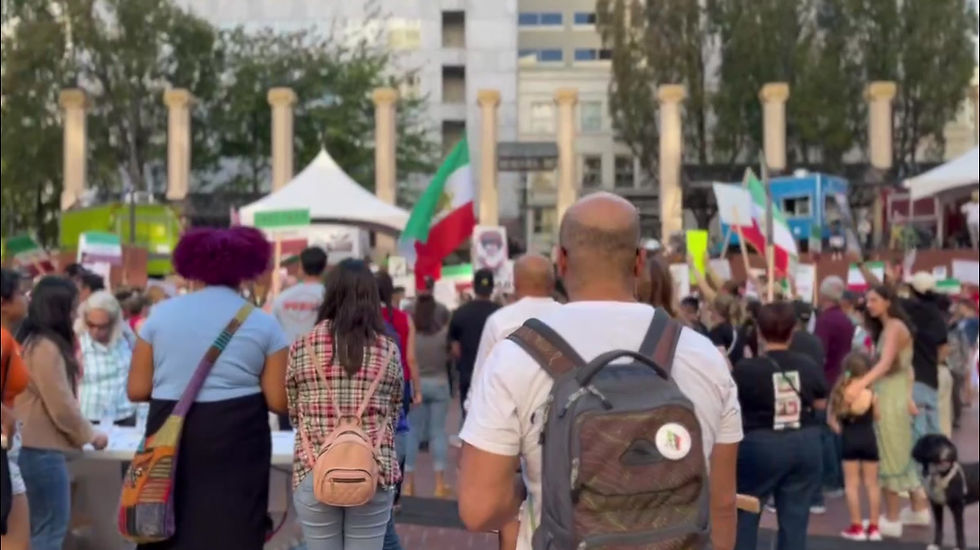
Free Iran PDX was created by a group of devoted volunteers after the tragic death of Mahsa Amini to spread awareness and create community support for fellow Iranians living in Portland, OR as well as across the country. Free Iran PDX does not affiliate with any political groups and solely serves the purpose of supporting the WOMEN LIFE FREEDOM movement in solidarity with women in Iran.
TIMELINE: IRAN'S FIGHT FOR FREEDOM
Present Day - The Struggle Continues
Late January 2026 - International Pressure Mounts
January 22, 2026 - European Parliament Votes
January 17-Present, 2026 - Mass Execution Campaign
January 15, 2026 - U.S. Sanctions Regime Officials
January 10-15, 2026 - Hiding the Bodies
January 8-9, 2026 - The Massacre
The bloodiest 48 hours in modern Iranian history
January 1-7, 2026 - Nationwide Revolt
December 29-31, 2025 - Rapid Expansion
December 28, 2025 - Protests Begin
2022-2023 - Woman, Life, Freedom Movement
2019-2020 - Bloody November
2017-2018 - Nationwide Protests
2009 - Green Movement
1999 - Student Protests
1988 - Prison Massacres
1981-1982 - Mass Executions
1979 - Islamic Revolution
Internet access remains severely restricted. Protests and strikes continue despite brutal repression. Estimated 36,000+ killed since December 28. Iranian people remain defiant, demanding complete overthrow of Islamic Republic. Their message is clear: No reform. No negotiation. The regime must go.
Spain and France reverse positions, agreeing to designate IRGC as terrorist organization. U.S. carrier strike group arrives in region. Trump warns of "very strong action" if executions continue.
European Parliament overwhelmingly votes to designate IRGC as terrorist organization, though France and Spain initially block implementation.
Judiciary Chief announces rapid trials and executions as "deterrent." Over 24,000 detained protesters face capital charges of "moharebeh" (waging war against God). First executions begin. 19-year-old Amirhossein Ghaderzadeh sentenced to death by hanging. Reports emerge of soldiers executed for refusing to fire on protesters.
U.S. Treasury sanctions Ali Larijani and other officials for coordinating the crackdown. Larijani identified as "one of the first Iranian leaders to call for violence" against protesters.
Total communications blackout continues. Regime raids hospitals, confiscates bodies, threatens medical staff. Families forced to pay for bullets that killed their loved ones ($480-$1,720 per bullet). Security forces raid homes, conduct mass arrests. Estimated 20,000+ additional deaths during this period.
After exiled Crown Prince Reza Pahlavi calls for nationwide demonstrations, regime launches coordinated massacre. Internet completely shut down. International calls blocked. Security forces open fire indiscriminately on crowds with live ammunition, heavy weaponry, and armored vehicles. Internal Health Ministry estimates indicate at least 30,000 killed in first 48 hours alone. Hospitals overwhelmed with gunshot victims. Regime withholds bodies from families.
Protests explode to nearly 200 cities across 27 provinces. Workers, students, teachers, nurses, truck drivers join. Protesters temporarily seize control of some neighborhoods. Death toll rises to 62, over 2,300 arrested.
Protests spread to over 100 cities across 22 provinces. Central Bank governor resigns. Security forces use tear gas. At least 7 protesters killed in initial days.
Economic collapse triggers protests in Tehran's bazaars. Iranian rial hits record low of 1.42 million to the dollar. Protests quickly spread nationwide with chants of "Death to Khamenei" and "Death to the Dictator."
22-year-old Mahsa (Jina) Amini killed by morality police for "improper hijab." Her death sparks the Woman, Life, Freedom movement. Nationwide uprising led by women and youth demanding end to Islamic Republic. At least 551 killed, tens of thousands arrested. Regime executes protesters publicly as deterrent.
After fuel price hikes, protests erupt nationwide. Internet blackout imposed. Between 300-1,500 protesters killed in one of the deadliest crackdowns in modern Iranian history.
Economic protests spread across Iran. Chants evolve to "Death to the Dictator." Regime responds with live ammunition and mass arrests.
Millions protest disputed presidential election results. At least 72 protesters killed in brutal crackdown. Regime imposes censorship and mass arrests.
University students protest for democratic reforms. Security forces violently crush the demonstrations, killing and imprisoning students.
Between 1,000-30,000 political prisoners systematically executed in what became known as the 1988 massacres. The regime denied these killings for decades.
Approximately 3,400 political prisoners executed as the regime consolidates power and eliminates opposition.
The Islamic Republic seizes power, establishing an authoritarian theocracy that ends Iran's constitutional monarchy and begins decades of oppression.